
Academics
Whether you’re on the path to corporate law, public interest advocacy, legal research or anywhere else—Illinois will get you there. With access to four degree programs, renowned faculty, and real-life learning opportunities, you decide your direction.
Find Your Path
Areas of Strength
Illinois provides a flexible academic experience, allowing you to gain valuable experience in areas where we have a strong and established legacy, such as business law, criminal law, environmental law, and public interest law.

Create Your Experience

Spend a semester living, learning, and working in Chicago – open to all interested third-year students.
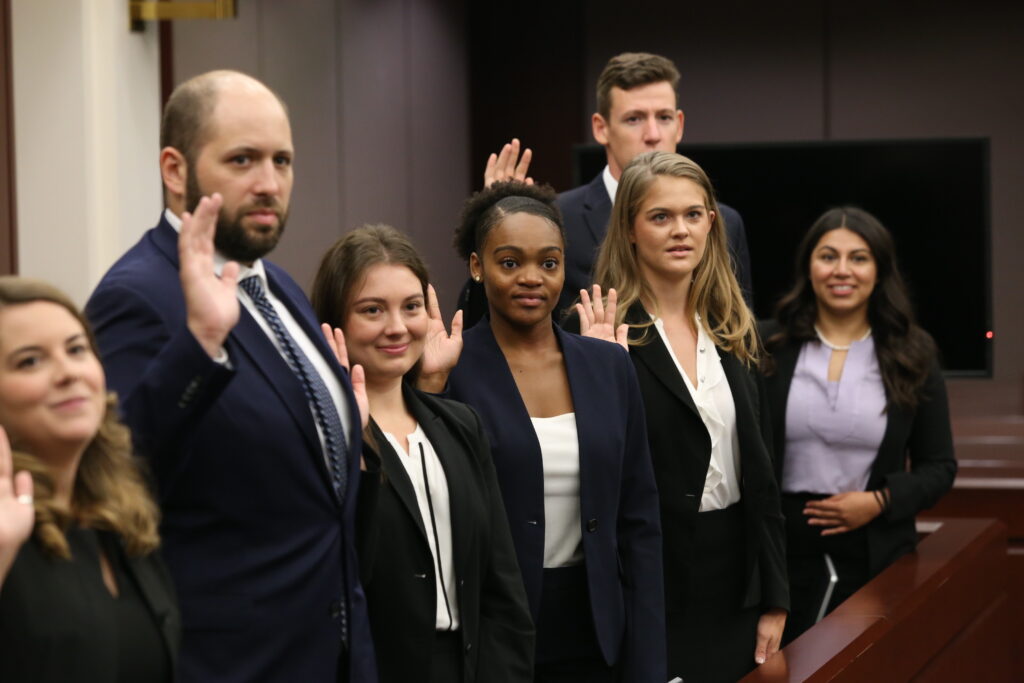
Gain experience working with real clients in a diverse array of pratice areas, including immigration law, veterans law, First Amendment law, family law, and more.

Take advantage of our partnerships with over 35 schools in countries around the world and spend a semester abroad.

Hone your advocacy and professional responsibility skills by trying out to become a member of our award-winning trial teams, moot court teams, and other competition teams.
From Our Students
“I want to go into transactional law and I feel like a lot of these classes that I’m taking now have been the most applicable to my legal career and my future. It’s a unique program and such a great opportunity to get a head start in what I’m going to be doing.”
– Srinithi Narayanan, ’23 spent her last semester in the Chicago Program and is now an associate at Kirkland & Ellis.